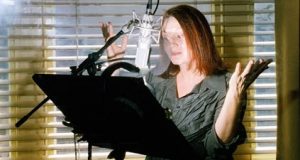
Lessons in Audio Book Narration

by Abbe Holmes

If you’ve ever thought that audio book narration is for you.

Or you’re an author whose publisher wants you to narrate your own book, then you’ll probably want to know more about the whole process.

The big news is that the growth of audio books and, with it, the search for excellent narrators is growing.

If you have a love of words and language, understand plot and structure and the definitions of a first, second or third person narration…

and you have a really interesting, engaging voice and are a solid sight reader…

…then there’s no reason why you couldn’t make a splash in this area.

Skills for Successful Audio Book Narration.

You may be thinking, “Well sure.  I love reading and I can read well, so I’d be good at this”.

And that may well be true.

But there are a few other things that are true about audio books.

The first thing I want to say is that audio book narration is a deeply specialised craft.

Skills you’ll need are far more than reading words in ‘your’ voice.  

You need to interpret the narrator or lead character’s voice, the authors intention and the overall tone of the work.

This could mean taking on a particular persona or attitude.  It could mean creating a ‘character’ voice.  And it could mean having to voice several different characters, differing sometimes vastly in in age and gender.

Audio Book Narration Checklist

Here’s a checklist of skills that may help you to identify what you already have or what you may need to get better at. You:

  • are a lover of words and language
  • read books and have a wide and varied interest
  • listen to audio books and know what works and why
  • understand the differences between 1st, 2nd or 3rd person narration
  • have a voice that’s clear and resilient enough to read for long periods of time and remain consistent in performance style and energy
  • have the ability to understand the difference between delivering narration to the listening audience and creating believable scenes and characters with dialogue.

If you already do these things, or understand these concepts, then you may have, by default, given yourself some initial essential skills for audio book narration.

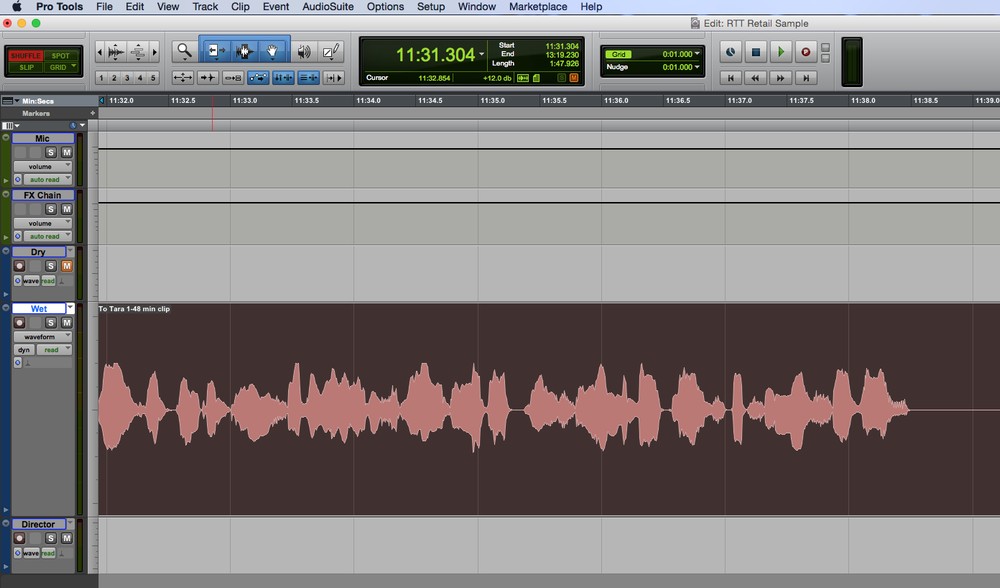
What’s Involved in Audio Book Narration

Read the rest of the article at VoiceoverCoach.com.au…

Audiobook Production Pointers from Audible Approved Producers

by Emily Curran

Audible Approved Producers are the best of the best on ACX. Qualifying Producers have a proven track record of dynamic performances and superior-quality audio. They’ve been around the block a few times and learned a thing or two about compelling narration, pristine sound, and how to make the whole production process run a like a well-oiled machine. We checked in with a few of our newest AAPs to get their advice on producing like a professional.

Q: WHAT’S YOUR BIGGEST PRODUCTION TIMESAVER?

Paul Stefano: OUTSOURCING. I hire out nearly all of my editing and proofing. This allows me to work on several projects at once as I focus on what I do best: the narrating. Plus, it’s always good to have a second set of eyes (or ears, as it were) on your work. If you made a mistake once, you are likely to do it again, so doing your own quality control as a narrator is generally a bad idea. Once I made this switch in my career, it was like the heavens opened up to a whole new world.

Heather Masters: I keep a file in the folder of each book I produce, which is titled ‘Voice Profile.’ Each time I record a new character, I highlight a few lines and copy [the audio] into my voice profile. This way, even if I don’t see the character again for days, I can jump right to their voice and refresh my memory, ensuring my characters are consistent. It’s an invaluable tool with a series!

Travis Baldree: Know your software, make shortcuts for anything that can be short-cutted, and constantly be on the lookout for ways to optimize your time or reduce repetitive actions that slow you down or introduce problems.

Aven Shore: I maintain my progress notes on an online document, so I can reference them anywhere.  Even better, it’s shareable, so I use it to communicate with my sound engineer and proofer so we don’t have to email each other constantly. We can all log in to the document and see deadlines, pickups, file names, where I’m at in the recording, upcoming books scheduled, special treatment notes, and more (we use Zoho Docs, but there are similar alternatives, like Google Docs).

Rich Miller: I think it’s probably Punch & Roll recording [a method of recording that involves rolling back a short way into a recording, playing, and then punching into the record at a set point to record over errors]. It doesn’t feel like it in the moment, but when I’m done recording I’m pretty much done. Once you get the rhythm of stopping, setting the cursor, and recording again, it doesn’t take much time at all.

Read the rest of the article at ACX…

7 Places to Learn Audio Editing for Audiobooks

by Karen Commins

In my last article for narrators, I wrote about 3 ways to become a computer super user. One piece of software that all audiobook narrators need is a Digital Audio Workstation (DAW). Coaches and new narrators often ask me where they can learn how to use their DAW.

The 7 options listed below in no particular order will help you learn the DAW software.

1) The Deyan Institute offers classes in Pro Tools for Production and Pro Tools for Post-Production, as well as an option for 6 hours of Pro Tools instruction.

2) Edge Studio offers webinars in Audition, Audacity, Pro Tools, Reaper, and Twisted Wave.

Read the rest of the article at KarenCommins.com…