2020 Vision: Making New Years’ Resolutions Stick for your Creative Goals

by Stage 32

2020 Vision Making New Years Resolutions Stick for your Creative Goals

Welcome to the new decade! The holidays are the perfect opportunity to take inventory of all the activities you have done this year and examine what has worked for you and what you need to improve on.

A Resolution is only as good as the plan devised to execute it.

And before the planning, comes the soul searching. Every activity we undertake in this life, be it professional, or personal, has an opportunity for growth at its core.

I am offering below some questions you may want to ask yourself that will show you what your top 5 priorities should be for your script, project, or film and some of my personal recommends and practical suggestions for the areas that you have decided, after careful examination, that contains the most of your weak spots.

How are your pitching skills?

If you know who your ICA (Ideal Client Avatar) is and you what emotion you need to convey to solicit a read or an in-person meeting, you are ahead of the game.

If you can write a query email that states who you are, the comps of your project or script, and gives just enough information on the story and plot to incite interest, you are ahead of the game.

If you can sit in a room or get on the phone with an interested party and be able to establish a genuine connection (knowing the person you are pitching to and making a personal compliment stick does go a long way) while being able to convey your passion and the most important elements of your story in less than 5 minutes, you are ahead of the game.

For some great tips on how to “sell” I would suggest you read “Born to Win” by Zig Ziglar.

What is the positive to negative feedback ration you have received so far?

If you have gotten at least 70% response to your queries or meetings and scripts submissions regardless of the reaction, you are ahead of the game. You made enough of an impression for an executive to take the time to let you know they did read you or thought of your project and therefore were able to respond in some manner.

If you had a polite pass, such as a compliment on some aspect of your story and writing or a pass with actual details on why your material was passed on, you are ahead of the game.

If you got a response for you to keep in touch with the progress of your project or script, you are ahead of the game.

If your feedback ratio is under 70%, then bluntly put, your material is just not good enough or its time for the current marketplace has not come.

Read the rest of the article at Stage 32…

What’s the BEST Acting Technique?

by Daniel Bradford

What even is an ‘Acting Technique’?

Let me start by saying that all of the different techniques, concepts and paradigms we use in order to conceptualise and approach acting (or any activity for that matter) are not ultimately true. They are mere representations and conceptualisations of the ‘thing’ itself. They are as we say, ‘fingers pointing to the moon, they are not the moon’. Meaning no technique can ever fully encompass the entirety of the actual experience of acting. They are abstractions, useful though they may be. The idea is to choose the most useful ones for you and to keep upgrading your set of tools as you progress throughout your life and career. By continuing to occupy a ‘beginner’s mind’ you will be humble enough to gently discard old concepts in favour of new, more subtle and useful ones. Eventually you’ll be able to let go of them completely, however, only once you have truly mastered them. Here’s a couple ways we can think of it.

Acting and Human Behaviour

Acting techniques in their best forms, are abstractions of human behaviour. They are ways of breaking down and codifying the behaviour we already do as humans. Its a kind of reverse engineering. We see the end result and we work backwards from there to figure out what led there in the first place. We can then use this new blueprint to lead us there again. It’s a kind of psychology but with a specific purpose, different to that of the traditionally therapeutic setting. Its goal is slightly different, though one could still argue both are attempting to ‘hold the mirror up to our own nature’.

Essentially the process is about making the unconscious conscious and then letting that new understanding or approach become unconscious again. See ‘Four Stages of Competance’ in Glossary

The Fundamentals of Acting

Larry Moss* breaks down the formation of human behaviour and therefore acting into three main areas:

  1. Objective/goal – What a person wants
  2. Obstacle – What is in the way of what they want
  3. Intention/action – What they do in order to overcome the obstacle and get what they want

To me, this is really as simple as it gets when breaking down not just human but any animal behaviour, even bacteria! 

The idea is that if you reflect upon your own behaviour and that of others, you will see that this paradigm is simply a breakdown of how humans behave moment-to-moment. It’s not meant to be some lofty confusing system of magic that bears no resemblance to reality. Nor does it promise, that somehow, if one learns these complicated spells and incarnations, one will become a great actor. 

Acting Techniques as Tools

The idea is that we begin to view the world through the lens of the paradigm we employ, we see how it fits quite well to some extent and gives us a foundation to work from. Now the danger of this is becoming too attached to any one paradigm or abstraction and treating it AS reality, or trying to make reality fit IT. It is at the end of the day, as all words and concepts are, merely a tool to help us along the way towards our goal. An example from clinical psychologist Jordan Peterson goes something like this:

‘If you are attempting to chop down a tree, a knife is better than your hand. But if you come across an axe, discard the knife in favour of the axe. If you then come across a chain-saw, discard the axe’ and so on. 

Read the rest of the article at Mindful Acting…

5 Tips to Find the Perfect Acting Class

by ActingClassFinder.com

For many aspiring actors––and for those who have worked in the industry for some time––the right acting class is an essential tool for developing and fine-tuning their craft. Acting is an incredibly personal occupation, so knowing how to find the right acting class for you is an important skill all its own. The best acting class should be an organic fit with your creative goals, schedule, and budget––and can make the difference between plateauing and thriving in your acting career.

Here are a few tips to help you find the class that will push you creatively, advance you professionally, and not break the bank.

FORECAST YOUR SPENDING

While actors are meant to explore all the realms of imagination, we exist in a world with realities, and one of those realities is financial. On average, an acting course can run anywhere from $200-600 dollars per month, with private sessions and workshops ranging from $25-100 or more per hour. Budgeting with an eye on your goals and income is an important first step in the process of choosing a class.

Miata Edoga, professional actor, President and Founder of Abundance Bound, a financial education service for actors and creatives, offers this: “The choice of a class really needs to be approached from your ability to sustain that choice.”

Edoga suggests coming from a place of clarity, not self-denial, when prioritizing the financial commitment to an acting class. “Ongoing training and honing of my craft is important, and I have to find a way to do that than I can financially sustain for the long haul. We must become people who forecast our spending. A forecast is when I say, ‘These are the resources I have, and this is how I am choosing to allocate those resources.’ This is how I am choosing to spend my money––and getting really clear on what those choices are and then holding myself to that.“[Financial forecasting] is different from budgeting,” says Edoga. “That’s a more powerful way of looking at it than ‘you can’t have this or can’t have that.’”

OUTLINE YOUR GOALS

Jim Carrey famously wrote himself a check for 10 million dollars in his starting days, using visualization as a method to outline goals for his acting career. Choosing the right acting class requires a similar commitment to goal setting, and while writing a million-dollar check may not be your style, writing down your goals is a fantastic way to reverse engineer the steps you’ll need to take to achieve them. One fantastic tool for goal setting in any industry is the S.M.A.R.T. system: setting goals that are specific, measurable, attainable, realistic, and time-bound. 

Read the rest of the article at ActingClassFinder.com…

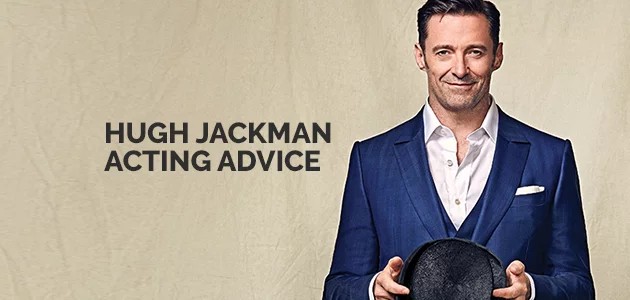
Hugh Jackman Acting Advice

by Patrick Cullen

Off the back of the extraordinary success of The Greatest Showman, Aussie acting legend Hugh Jackman sat down with the crew of the BAFTA’s and dished out some excellent acting advice. I have compiled the biggest takeaways here for your convenience. Get amongst it.

‘Film is the directors medium, find out who the director is.’

Hugh’s first point in this interview is about the director, trust and collaboration.

“You need to be able to trust that director, and know that the director is going to push to get the best out of you…They give you freedom in these boundaries, kind of like parenting really”

Especially in film, your character lives, breathes and dies at the hands of the director. You as the actor have to be able to trust them and trust their vision. Importantly that they need to know what they want from you and are ready to work with you to achieve it. Research the director before you take a role, look at some of their previous work, grab a coffee with them and get a vibe. If you feel like it’s weird or you don’t connect, it probably isn’t going to work out.

‘The last thing you ever want in front of the camera is doubt’

The viewing audience on the other side of the camera are like circling sharks, but instead of smelling blood in the water, they smell doubt in the performer. Jackman says the last thing you ever want in front of the camera is doubt. A performer who is unsure of themselves, who has not made choices, who cannot take direction is going to really struggle. What this comes back to is doing the preparation. It is great to be spontaneous, but not so great to be unsure of yourself.

‘Be friendly to everyone’

“In the Australian film industry everyone talks to everyone, if they’re not making fun of you they probably don’t like you… I much prefer to feel like we’re in it together”

Particularly in Australia, but I think this applies worldwide – be friendly to the cast and crew around you. No one likes a diva and in the modern industry, that sort of behaviour is just completely unnecessary. Jackman is right about Australian sets too, if the crew is treating you with too much respect it’s highly likely you’re not the most loved person on set. Being a team player is a key part of being an actor, so try and fit into the culture of your film set as much as possible. Everyone is working towards the same goal, to create a great film.

Read the rest of the article on Stage Milk…

8 Ways to Fight Disenchantment

by Ali Wills

Not all of us have been there, but many of us have.

This is the first audition you’ve had in months, you’re super nervous because you need this money to make ends meet and hate your survival job (ok, maybe you don’t hate it, but you’re becoming known for it and not as an actor) and you’re ready to be on TV already!

This is your shot—to show your agent that you’re bookable for lead roles, and feel good about yourself as an artist; like you’re the real deal out here really doing it.

Fast forward, you’re in the audition room, for your one liner co-star role. You try to make small talk with the casting assistant who doesn’t seem to be feeling you. You say your line, and the assistant ends the audition with the fatal blow of  ”Thanks for coming in” and your day goes to crap from there. 😩

After this cycle goes on for the umpteenth time, you’re completely over it and begin to feel that creeping feeling of disenchantment. 

I remember one day after my second move to New York City, walking to my survival job in Chelsea and being completely miserable. I looked around and saw everyone on that street looked just as miserable and began to wonder, is this what it’s all about: Feeling disenchanted and disappointed? Thankfully, the answer is no.

Here are the lessons I’ve learned on how to avoid becoming jaded and fighting disenchantment.

1. LEARN WHAT THAT ADVICE YOU KEEP HEARING REALLY MEANS.

I know I’ve heard it a million times, “Enjoy the process,” but I never quite digested what that meant. Without respecting that there is a process to any goal, you’ll never make it, let alone feel good about where you’re going. By definition process means a series of steps to attain an end, so the process of going broke, going back home, walking 5 miles from one city to another, shaving your head for a role, then not having the money to get new headshots, being dropped by the agent that scouted you, and throughout all of this holding on to you self worth, is all, technically, a process to landing bigger roles.

2. GET OUT OF YOUR OWN WAY.

Ask yourself, are you sabotaging your success and your reputation? The whole week you were given to memorize those sides, did you just leave them in your bag because you were confident that you knew the two lines, only to fumble through them in the audition? Be honest with yourself and recognize that you are the CEO of your business. Casting directors will choose actors known for their reputations of consistently delivering good work.

3. DEAL WITH YOUR INSECURITIES.

This industry is hard. Everyone is charming, funny, talented, outgoing and any insecurities you have will be magnified. Your self esteem will take a big hit if you aren’t secure and this industry will not coddle you. Realize there is an ebb and flow, there are enough jobs if you’re patient and persistent, so don’t compare your attributes.

Read the rest of the article on The Modern Actor…

The Art of Showing Up: 7 Things Creatives Must Practice to Succeed

by Joey Madia

The Art of Showing Up 7 Things Creatives Must Practice to Succeed

The most important thing in life is showing up. I am blown away by your ability to show up. (Keanu Reeves, Hard Ball)

Prologue

Primarily being a writer, and one who does a lot of historical research, I spend a lot of time alone. So, when I’m hired as an actor, director, storyteller, or teacher, it gives me an opportunity to test my philosophies of keeping motivated and inspired and doing the same for others.

For three weeks in June I toured as Marxist revolutionary Che Guevara in a form called Modern Chautauqua, which involves about 18 months of intensive research, the writing and performance of a 45-minute monologue, and 20 minutes answering questions from the audience, first as the historical persona and then as the scholar-performer. It also involves conducting related workshops.

During the tour, I was able to test the principles behind Showing Up. As I get older, I want to be out acting, directing, and teaching more than ever before. Which means making the most of opportunities.

I was surprised and energized by the effect of practicing the seven principles behind fully Showing Up shared in this article. Several opportunities have come my way, and the energy of what these principles allowed me to accomplish has yet to diminish.

Being asked to write about it for Stage 32 is proof enough of that.

So here’s what I practiced, based on 30 years of putting myself out there as a Creative.

1. Learn to Say Yes to Life

The Art of Showing Up 7 Things Creatives Must Practice to Succeed

Six years ago I received an email that put this essential aspect of Showing Up foremost in my career. I was offered third lead in a remake of a classic horror film. It meant juggling my editing business, theatre company, and several writing projects while being on location for three weeks, shooting for long hours. Without hesitation—and quite out of character—I said yes. It was a knowing that this would be about more than just doing the film. Turns out, I was right. So pay attention to intuition when making decisions. The juggling wasn’t easy—I fell asleep at the wheel for a split second driving home for a few days after being awake for 29 hours—but the experience opened several doors. My saying yes to the three-week tour as Che had similar sacrifice and success.

Saying Yes to Life means being able to audition anytime, anywhere, and giving it all you’ve got. By audition, I mean acting auditions, pitches, video chats, interest meetings—any time there’s an opportunity to show your stuff and score a gig. As I’ve said elsewhere, it might mean dressing up in full pirate regalia and auditioning in a kitchen in a small town for strangers (I did that—it’s worked out well.) Point is, let no opportunity come and go without giving it 100%.

2. Be Your Most Authentic Self, No Matter the Risk

Authenticity, a concept I learned from Brené Brown, is crucial. In this time of social media trolling, othering, and at times disingenuous practices of PC behavior—which often fly in the face of good, honest art that provokes thoughtful, respectful discussion—it is harder than ever to be Authentic, because the risks are greater and the use of Persona for personal and professional gain is everywhere.

But Authenticity is essential to Showing Up. Start by knowing why you’re there. What are your motivations? We of course need money to eat and for the value it assigns to our work, but if that’s your only reason, it’s a guarantee you’ll be In-Authentic. You’ll say what they want to hear, compromise your work to please, and you won’t be particularly memorable. You’ll be another in a long line…

A core piece of being Authentic is seeing every chance to work—to be in front of an audience, cast, or group of students; to have someone read or see my work; to have someone ask my advice—as a Privilege. A lot is made of established actors believing their current job is their last one. But that’s not all I’m saying. It’s about Fearlessness in being the Real You. Don’t Pretend. Say what’s on your mind—which of course needs to be well thought through and based on the tangible facts and skill sets you’ve accumulated through learning your craft—and do it because you are making the most of this opportunity, because you know it could have gone to someone else.

Practice Don Miguel Ruiz’s “Four Agreements.” The first is: Be Impeccable with Your Word. Don’t gossip, say what you mean, and follow through, and know that words have power. Choose them wisely.

Read the rest of the article at Stage 32…

Reclaim Your Worth as an Artist

by Mihaela Ivan Holtz

Reclaim Your Worth as an Artist

Reclaim Your Worth. Reclaim Your Art.

As an artist, you need a powerful, resilient, yet flexible and fluid sense of self-worth. Self-worth keeps you connected to your creative energy. When you feel in touch with your self-worth, you can make art that you believe in. You trust the value of what you create – its message, meaning, power, and purpose.


A real trust in your creativity begins with accepting yourself and all that you are. Connected to yourself, you’re able to maintain a solid belief in your own value, despite your perceived strengths or weaknesses, beauty or shadows. Grounded in your sense of self-worth, you don’t question what you create, you just do. You don’t get stuck worrying whether your art it will impact your audience, you just trust that it will find its way to those who will appreciate it. You don’t try to measure its value, you just feel its value. And, you don’t compare yourself with what others are creating, you just get to work and make your imprint into the world.

When you are in this mindset it’s not about proving anything. It’s about living and playing in the fantasy realm. It’s about bringing your daydreams to life. It’s about engaging in your craft and your pure self-expression. Fully trusting your creativity, you can give clear voice to unanswered questions, the different complex human experiences, or the unique depth of your characters.

Yes, all of this is possible when you’re in touch with your self-worth. It’s a simple yet powerful way to live, but it can feel so difficult to attain. In truth, it’s not about attaining anything at all…

Self-worth is not about who you are, it’s about what you do with what you are.

Reclaim Your Worth as an Artist


Self-worth is not an entity. It’s not something you possess or can lose. Rather, self-worth is something you can have access to. It’s something that flows forth when you’re in a relationship with all of who you are – your greatness, your messiness, your unfinished parts, your craziness, your brightness, and your darkness.

To embrace your sense of self-worth is to embrace your most authentic self and your most authentic experiences.

Self-worth is not about never feeling insecure or scared. It’s not about avoiding feelings of shame, rejection, or about never feeling unseen or unloved. Self-worth is about trusting that despite all that, you still have value. Therefore, you can express your creative energy, show up, and bring your art in the world.

Regardless of your experiences, self-worth protects you from letting anything stand in your way of being creative. It helps you see that, in spite of anything you might have been through, you are a human being who has inherent value and who has an ability to add value to the world. Supported by your self-worth, you can connect to your full humanity and access real courage, determination, and power to pursue what you want to create.

How Can You Cultivate Your Self-Worth in a Career That Can Tear You Apart?

Read the rest of the article at Stage 32…

The Introverted Actor Survival Guide

by Emily Liu

Introverted Actor Survival Guide

Hi, I’m an introvert and an actor (yes, we exist).

For me personally, this can make my chosen career path extra challenging at times (yes, the financial instability and cut-throat competitive industry wasn’t enough already). Acting is a team sport and far from lacking in social interaction. From networking, auditioning, rehearsing, performing, opening nights and closing parties, drama school and acting classes, you can bet most of your time will be spent around and with others. The long hours required of rehearsals, shows or film shoots is tiring for anyone, but for introverts can be especially draining.

There is a common misconception that introversion and extroversion dictate how outgoing a person is, but actually they describe how people gain energy (or recharge their brains!) For introverts, their energy is gained from within themselves and extroverts through others. This means that introverts recharge through alone time and are drained after social interactions, while the opposite is true for extroverts. While introversion and extroversion aren’t necessarily personality types (not all introverts are shy and extroverts outgoing), there are traits that are more common with each type. For introverts, there is a correlation with being quieter, a home-body and sometimes shy and socially anxious. As someone who identifies with all those qualities, I do feel I’m very much qualified on the introverted front. However, after a few years of braving various acting terrain I have developed a better understanding and knowledge of self-care for my introverted self. Here are some tips that have worked for me.

#1 Set boundaries and don’t always feel the need to ‘keep up’

Saying ‘no’ can be difficult and the desire to keep up with others and fit in with your peers or fellow cast and crew is strong. Parties and social gatherings seem to be particularly abundant in the arts (I’m looking at you drama school). Despite partying being the last thing I felt like doing after some mammoth weeks at drama school, I would felt guilty and stressed about not going to social gatherings, worrying about ‘falling behind’ socially. However, I eventually learnt to know and respect my limits. This meant sometimes choosing to get an early night or opting to organise a one-on-one coffee catch-up with a friend instead. It also meant that when I did choose to go to parties or events I enjoyed it much more because I’d chosen to be there mindfully so it was more enriching than draining. Looking after yourself means you can be a happier and more productive human and actor.

Read the rest of the article on Stage Milk…