
Are You Pimping Your Voice?

by Paul Strikwerda

I apologize in advance for what you’re about to read. I’m a bit fired up today.

What’s going on?

Well, I made the mistake of once again visiting the Voice Acting Alliance (Unofficial Group) Facebook Group. That’s the 9,300 member strong group where pretend voice actors will do pretty much anything for nothing.

If you’re serious about voice acting and you’re looking for solid advice, do yourself a favor and find another online community. Please.

You’ll avoid encountering people tackling pressing issues such as:

“Who will critique my s****y demo recorded in the closet with $70 worth of equipment. Kindly ignore the neighbor’s rottweiler.”

“I been having a hard time finding acting classes so if anyone could give me some references or pointers. I be very grateful.”

“I haven’t done any voice acting in this group yet. If any of you need a voice just let me know. I’m currently learning myself.”

I thought I’d give a test with the Kaotica Eyeball in case anyone would like to give this ball a try. Enjoy.”

I just learned what “slating” means… 10 auditions later…”

and the ultimate question:

“What food do voice actor eat?” (seriously!)

If I may, I’d like to add the following query:

“What diaper do voice actor wear?”

SPOON FEEDERS UNITE

The most surprising thing is that some colleagues with too much time on their hands take these questions seriously, and they start helping the ignorant members of this group under the guise of “giving back to the community.”

Excuse me, but that’s not giving back. This is spoon feeding toddlers and teens who are too lazy to do their homework. If you want to stand any chance as a future voice actor, you have to be self-sufficient instead of becoming dependent on people you don’t even know.

Read the rest of the article at Nethervoice…

Audiobook Production Pointers from Audible Approved Producers

by Emily Curran

Audible Approved Producers are the best of the best on ACX. Qualifying Producers have a proven track record of dynamic performances and superior-quality audio. They’ve been around the block a few times and learned a thing or two about compelling narration, pristine sound, and how to make the whole production process run a like a well-oiled machine. We checked in with a few of our newest AAPs to get their advice on producing like a professional.

Q: WHAT’S YOUR BIGGEST PRODUCTION TIMESAVER?

Paul Stefano: OUTSOURCING. I hire out nearly all of my editing and proofing. This allows me to work on several projects at once as I focus on what I do best: the narrating. Plus, it’s always good to have a second set of eyes (or ears, as it were) on your work. If you made a mistake once, you are likely to do it again, so doing your own quality control as a narrator is generally a bad idea. Once I made this switch in my career, it was like the heavens opened up to a whole new world.

Heather Masters: I keep a file in the folder of each book I produce, which is titled ‘Voice Profile.’ Each time I record a new character, I highlight a few lines and copy [the audio] into my voice profile. This way, even if I don’t see the character again for days, I can jump right to their voice and refresh my memory, ensuring my characters are consistent. It’s an invaluable tool with a series!

Travis Baldree: Know your software, make shortcuts for anything that can be short-cutted, and constantly be on the lookout for ways to optimize your time or reduce repetitive actions that slow you down or introduce problems.

Aven Shore: I maintain my progress notes on an online document, so I can reference them anywhere.  Even better, it’s shareable, so I use it to communicate with my sound engineer and proofer so we don’t have to email each other constantly. We can all log in to the document and see deadlines, pickups, file names, where I’m at in the recording, upcoming books scheduled, special treatment notes, and more (we use Zoho Docs, but there are similar alternatives, like Google Docs).

Rich Miller: I think it’s probably Punch & Roll recording [a method of recording that involves rolling back a short way into a recording, playing, and then punching into the record at a set point to record over errors]. It doesn’t feel like it in the moment, but when I’m done recording I’m pretty much done. Once you get the rhythm of stopping, setting the cursor, and recording again, it doesn’t take much time at all.

Read the rest of the article at ACX…

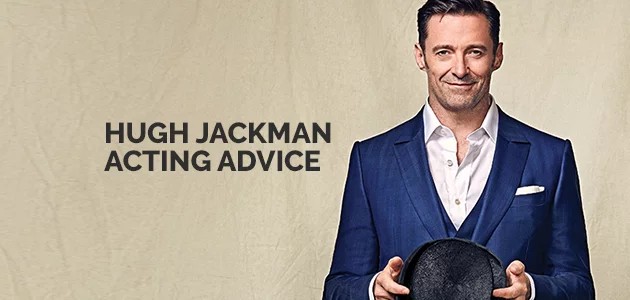
Hugh Jackman Acting Advice

by Patrick Cullen

Off the back of the extraordinary success of The Greatest Showman, Aussie acting legend Hugh Jackman sat down with the crew of the BAFTA’s and dished out some excellent acting advice. I have compiled the biggest takeaways here for your convenience. Get amongst it.

‘Film is the directors medium, find out who the director is.’

Hugh’s first point in this interview is about the director, trust and collaboration.

“You need to be able to trust that director, and know that the director is going to push to get the best out of you…They give you freedom in these boundaries, kind of like parenting really”

Especially in film, your character lives, breathes and dies at the hands of the director. You as the actor have to be able to trust them and trust their vision. Importantly that they need to know what they want from you and are ready to work with you to achieve it. Research the director before you take a role, look at some of their previous work, grab a coffee with them and get a vibe. If you feel like it’s weird or you don’t connect, it probably isn’t going to work out.

‘The last thing you ever want in front of the camera is doubt’

The viewing audience on the other side of the camera are like circling sharks, but instead of smelling blood in the water, they smell doubt in the performer. Jackman says the last thing you ever want in front of the camera is doubt. A performer who is unsure of themselves, who has not made choices, who cannot take direction is going to really struggle. What this comes back to is doing the preparation. It is great to be spontaneous, but not so great to be unsure of yourself.

‘Be friendly to everyone’

“In the Australian film industry everyone talks to everyone, if they’re not making fun of you they probably don’t like you… I much prefer to feel like we’re in it together”

Particularly in Australia, but I think this applies worldwide – be friendly to the cast and crew around you. No one likes a diva and in the modern industry, that sort of behaviour is just completely unnecessary. Jackman is right about Australian sets too, if the crew is treating you with too much respect it’s highly likely you’re not the most loved person on set. Being a team player is a key part of being an actor, so try and fit into the culture of your film set as much as possible. Everyone is working towards the same goal, to create a great film.

Read the rest of the article on Stage Milk…